

The Judgement Problem
How Human Judgement Builds Brand Distinctiveness
As businesses gain access to the same data, tools and intelligence, brands are becoming more competent … but harder to tell apart. The next competitive advantage lies in human judgement: the ability to interpret what matters, and create distinctive propositions that connect deeply with people
BY: DR Fiona Maciver | Brand & Experience Strategy AdvisorPUBLISHED: 17 June 2026

It’s human judgement that is essential to building distinctive brands - not more data
Businesses have never had more data, such sophisticated tools, or a greater capacity to produce polished work at speed. Yet within many spaces, it’s becoming harder to tell one brand apart from the next.
This is a massive commercial risk as brands begin to look and feel interchangeable.
Following the herd manifests in familiar ways such as using similar language to competitors, following the same market signals and intelligence, or making predictable claims about innovation, purpose, ease of use, or personalisation. While the output may look professional and sophisticated, it may shift a brand into the same narrow middle-ground as everyone else.
This is a commercial danger zone, because it risks the brand feeling interchangeable.
When customers can’t perceive a meaningful difference, they start to compare, and make purchase decisions, based on price, convenience and availability. That weakens customer preference, memory and loyalty. It also leaves the business paying for the attention it has failed to earn through brand distinctiveness.
Brand relationships are akin to human relationships. The strongest ones are rarely built on competence alone. These bonds are built through meaning, memory, trust, and the feeling of being understood.
Not standing out strongly enough to build those bonds is typically treated as a creativity problem. But I believe it’s a strategic problem, grounded in a weakening of the value ascribed to real-life human judgement.
In this article, I explore why enabling teams to make decisions based on experience, interpretation and sound judgement will increasingly separate the businesses that flourish from those that simply blend in.
Brand distinctiveness starts with understanding what matters
It’d be easy to link brand sameness with the widespread adoption of generative AI.
But this issue has been brewing for far longer. It’s not primarily a technology problem so much as a strategy problem.
Long before gen AI became widely adopted, businesses had grown reliant on looking sideways at competitors, upwards at trends, and inwards at operational targets, rather than focusing outwards on customers, their emotions, and the needs and nuances of their lives.
In contemporary business, customers are increasingly encountered in abstracted forms: Segments, dashboards, sentiment scores, personas and journey maps. Each can contribute useful working knowledge. However, brands increasingly rely on them as a proxy for actually getting close to the customer.
The business may know what customers clicked, where they dropped off, or which message converted most strongly, while remaining fundamentally unclear about what real people value, trust, fear, or hope to feel.
Those are often the factors that make someone choose one brand, product or service over another.
My message is this: information can’t be equated with deep understanding.
Data can reveal common customer behavioural patterns. But it takes sound human judgement to determine which signals are relevant, what a datapoint might mean in context, and whether the prevailing pattern is worth following at all.
Brands that connect meaningfully with customers, and move their sectors forward, rarely follow data or convention mechanically. They interpret the evidence, question the established frame, and trust their teams to exercise cultivated creative judgement.
For example, Liquid Death moved away from the restrained, health-conscious codes of bottled water brands to the language of heavy metal, beer and dark humour. Gentle Monster turned eyewear retail into a theatrical, art-driven immersive experience. Loewe placed surrealism, art and craft at the heart of a traditional luxury house.
Three brands challenging category conventions
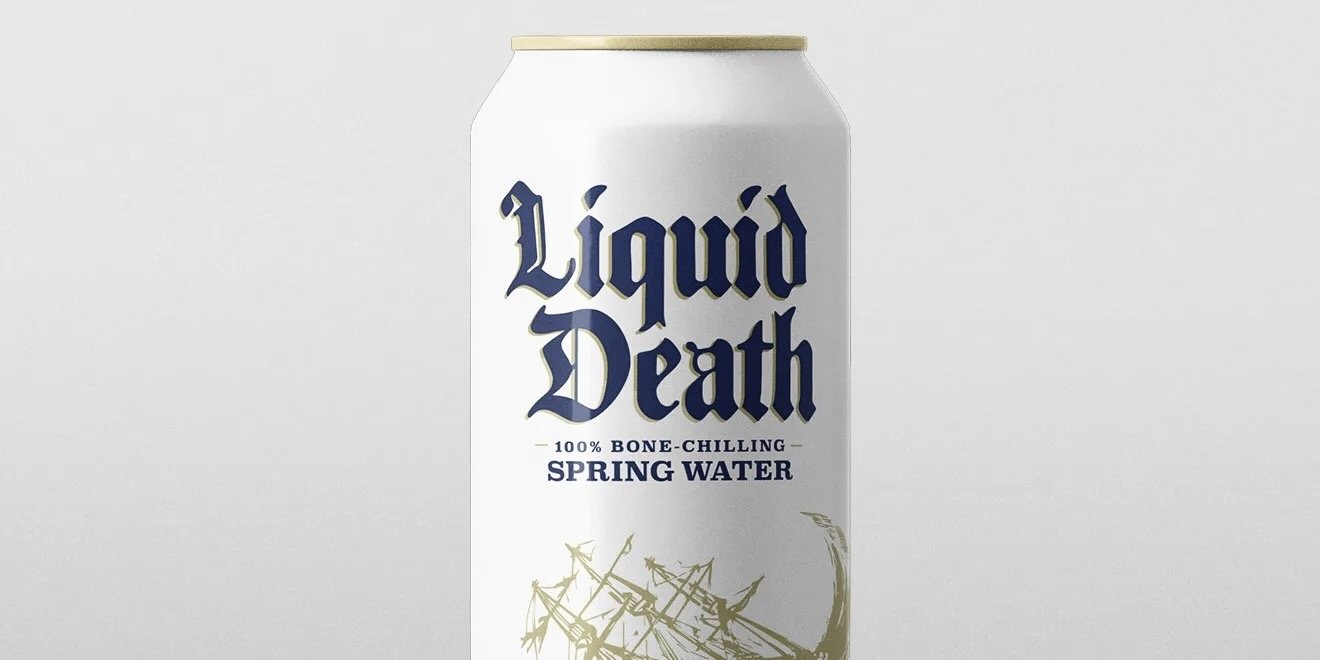
Liquid Death
Packaging and brand: Mineral water subverts the codes of heavy metal and beer

Gentle Monster
Paris Marais store, 2025: Eyewear retail becomes an art installation

Loewe
Autumn/winter collection 2022: Surrealism, art and craft inserted into the world of luxury
Though very different, these brands share a similar strategic approach. Each rejected the conventions of its category and replaced them with a more provocative interpretation of what the brand could be.
By trusting teams to experiment, take risks, and pursue what felt culturally and creatively right, they created personality and distinction in categories where the safer route would have been easier to defend.
Category conventions are choices to be questioned, rather than laws to be obeyed. The safe route is usually the least memorable.
“Information can’t be equated with deep understanding”
Interpretation is becoming the competitive advantage, and it rests on people
Most businesses now have access to similar market data, trend intelligence and tools for studying consumer behaviour. The game has changed.
In the past, access to superior intelligence created competitive advantage. Today, most of that information is widely available and of a relatively high quality. Businesses therefore have to create value elsewhere.
One place to do that is by honing the skills to decide what deserves attention, interpret what that information might suggest, and translate that judgement into stronger strategy and results.
But when information is everywhere, it becomes challenging to distinguish what really matters from what is merely measurable. Not every datapoint is meaningful. Not every customer request should be taken literally. Not every friction should be removed. Brands have to become more selective.
The questions that teams need to ask are open and interpretive, for instance:
What are consumers communicating indirectly?
What are they trying to preserve, avoid or become?
What signals are commercially significant?
Where should we depart from norms, rather than optimise within them?
Competitive advantage is becoming less about access to the most intelligence, and more about being able to interpret it with greater empathy, curiosity, imagination and conviction. That is how a brand retains its soul and humanity, while making commercially sound decisions.
When brands feel human, they connect emotionally
What’s becoming a core business advantage is the ability to connect emotionally with an audience on a deeply human level.
Hiut Denim and WatchHouse offer two interesting examples. One makes human authorship visible through the product itself. The other shows how a growing business can protect brand distinctiveness without turning a place-specific experience into a rigid formula.
Craftsmanship as brand strategy : Hiut Denim
Hiut Denim’s backstory is remarkable, because it continues to shape the entire business proposition.
Founded in Cardigan, Wales, the business was created around the knowledge and expertise that lay dormant in the town after the closure of its former jeans factory.
Craftsmanship sits at the forefront of both product and brand. Every pair of jeans is signed by the ‘Grand Master’ responsible for making it. The signature changes nothing functionally, but changes how the product is understood. Craft isn’t an abstract marketing claim; it’s attached to the person who has taken responsibility for the work.
Its repairs service reinforces the same belief. Worn jeans can return to the factory and continue their life, rather than being automatically replaced. This may not represent the fastest route to another sale, but it strengthens the meaning of ownership, and the relationship between company and customer.
Alongside its sense of place, distinctive language and communications, these details shape how the product is perceived, and the meaning it carries.
Nothing about the brand feels abstract. The customer can feel the people creating the product at every level. The human story - the craftsmanship, responsibility and longevity - is the proposition.
Protecting brand distinctiveness during growth : WatchHouse
UK coffee brand WatchHouse presents a different challenge: How a small, place-specific experience retains its character as the business becomes larger.
Growth creates pressure to repeat a formula. A standardised model is easier to finance, build and manage. But in hospitality, repetition can eventually strip an experience of its intimacy and relationship with place. The cafe becomes a unit, locality becomes styling, and something that once felt distinctive begins to feel formulaic.
WatchHouse has maintained a recognisable brand without making every location a carbon copy. Its cafes share an overall sensibility, but their architecture, materials and atmosphere respond to the individual building and neighbourhood.
This suggests a clear understanding of which elements carry the brand, and which should remain open to interpretation. Scale doesn’t need to destroy nuance, but WatchHouse shows that it’s something leaders must understand and deliberately protect.
Blandness is a strategic problem, not an aesthetic one
Competence is increasingly easy to produce. Blandness is the greater risk.
Memorable brands, products and services give customers something unusual or particular enough to recognise, remember and ascribe to that brand. Loewe’s puzzle motif is one example: A specific visual and product code that has become unmistakably its own.
When a brand drifts towards the average of its category, it becomes more substitutable. For example, Evian, Volvic, Fiji, and Vittel all draw on familiar ideas of purity, nature and source. The category logic is easy to understand, but the danger is that each begins to occupy a broadly similar emotional territory.
Indistinction weakens trust and memory. While most people may not be able to articulate why a brand feels generic or emotionally distant, they can always sense when products, advertising or communication feel far removed from their lives.
The pitfall is being perfectly competent in exactly the same way as everyone else.
Most forgettable work is not made carelessly. It is made quickly, by capable people, under pressure, using the best available information.
To develop strong brand distinctiveness, leaders need to disrupt this pattern, and introduce a more interpretive, more human standpoint.
Before a decision becomes an output, ask:
Is the idea rooted in something your team has actually noticed? Or does it begin with a trend report your competitors may have also downloaded?
Are you making a judgement or just making a choice? There’s a difference between interpreting evidence and taking a point of view on it, versus selecting the safest available route because it lowers the risk of being wrong.
Where can the customer feel that a human was paying attention? This doesn’t mean personalisation as a targeting mechanism, but rather evidence that someone considered the person’s real-life situation and chose to address it.
Would this work survive if you removed your logo? If a competitor could make the same claim, use the same language, or deliver the same experience, you have not yet created something that belongs only to you.
Relevant and commercially sensible aren’t the same as distinctive.
Four questions to strengthen brand distinctiveness
“The pitfall is being perfectly competent in exactly the same way as everyone else”
Good judgement can be trained
Sound judgement is not just about relying on intuition or a ‘feeling’. It brings evidence together with experience, empathy, curiosity, taste and imagination. It takes confidence to lead.
It can be trained through closer contact with customers, more time for observation before production, and an expectation that people explain the reasoning behind their decisions.
That reasoning can be structured through interpretative questions such as:
What did we notice?
How have we interpreted it?
What are we choosing to believe?
What might we be wrong about?
AI can strengthen this process by exposing assumptions and accelerating execution. But it shouldn’t replace the interpretive work that underpins meaningful strategic decision-making. You can learn more about the workshops I offer to train this skill here.
As every business becomes able to communicate a sense of competence, it will take originality and distinctiveness to stand out. Achieving that requires human judgement: attention, empathy, interpretation, imagination, boldness and confidence in decision making.
The brands that become most relevant, most valuable and powerful will leave a human trace: evidence that someone was present, understood the context and cared enough not to settle for the most obvious answer.
ABOUT Dr Fiona MaciverI’m a Brand & Experience Strategist, PhD in Design Strategy, and former UX Research Lead at Meta. I bring together experience from design and marketing, research and innovation, alongside practical techniques I teach at Central Saint Martins, London.
I help businesses develop original thinking and more distinctive brands.
Get in touchShape a brand people remember
If your business wants to get and stay ahead, work with me to notice what your competitors have missed, and turn that into your distinctive point of view.